.svg)

.svg)


.webp)
Pasadena is one of the few Los Angeles-area cities where century-old architecture, mature tree canopy and the Arroyo Seco's natural terrain still shape the character of entire neighborhoods.
We design ponds, waterfalls and water features for that setting specifically — properties where a mature specimen tree, an original 1920s drainage layout, or a historic district designation all factor into the design before a single stone is placed.
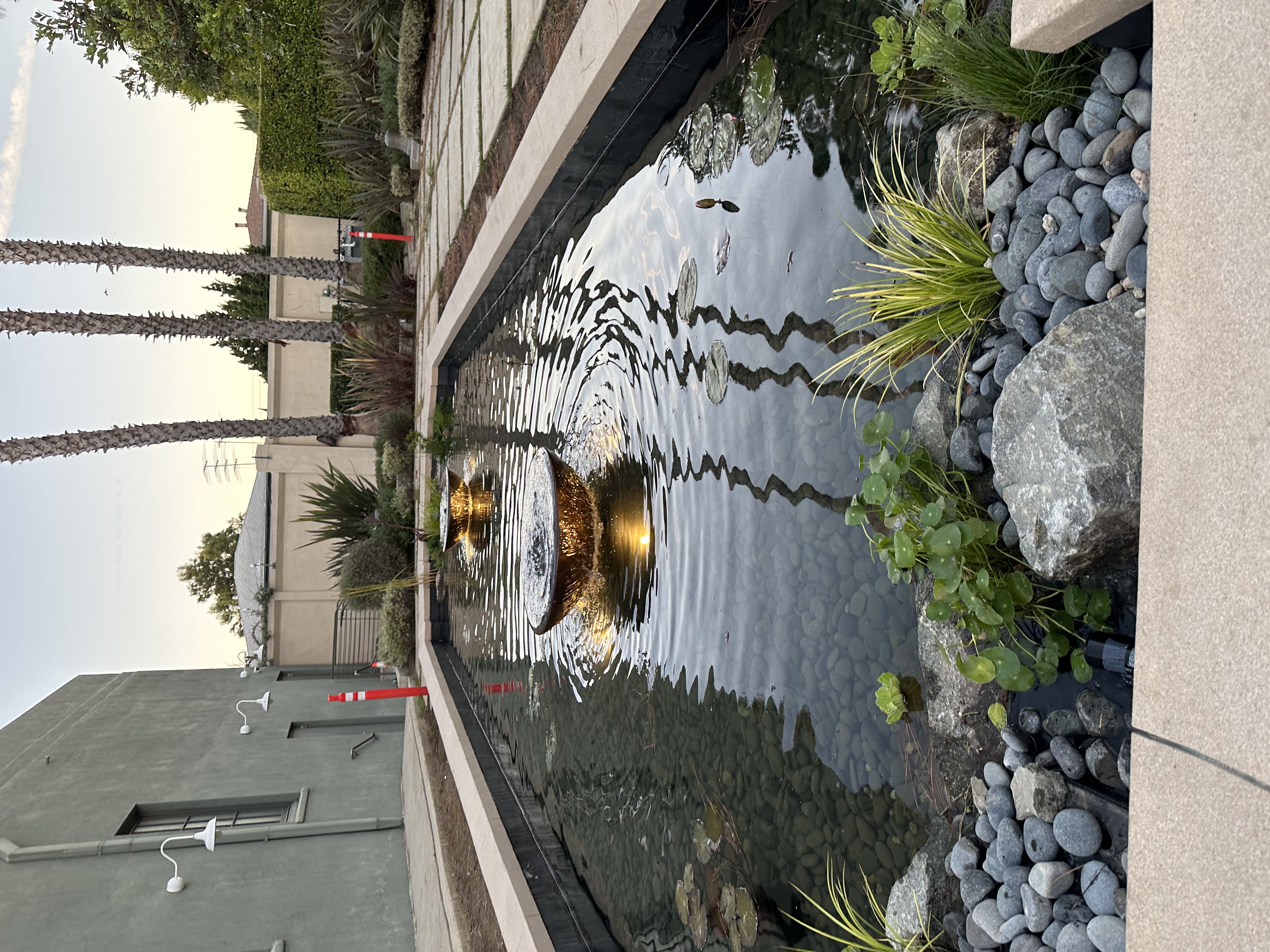
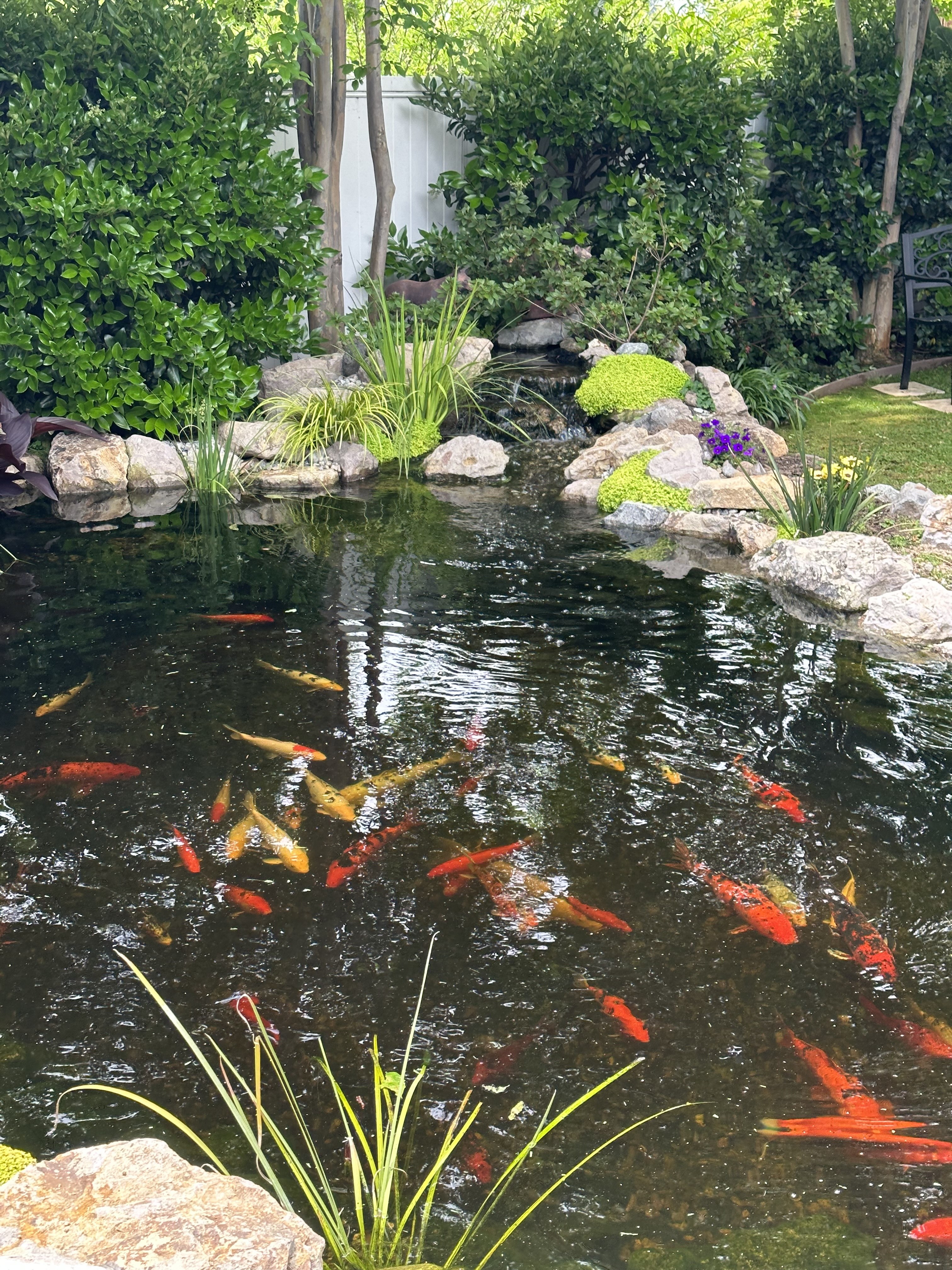
Pasadena has more designated historic districts than most cities its size, and it's a fair question for homeowners here: does that mean a backyard water feature needs Historic Preservation Commission approval?
In most cases, no. Design review in Pasadena's landmark and historic districts generally applies to exterior work visible from the public street — not to backyard landscaping. Landscaping itself is typically exempt from that review altogether, with one real exception worth planning around: protected and heritage trees, which fall under the city's tree protection ordinance regardless of a property's historic status.
In practice, that means most koi ponds, waterfalls and backyard water features move forward without triggering the design review process — but if your property has a specimen oak, sycamore or deodar anywhere near the planned work, that's the detail we plan around from day one, not something that surfaces as a surprise mid-project.
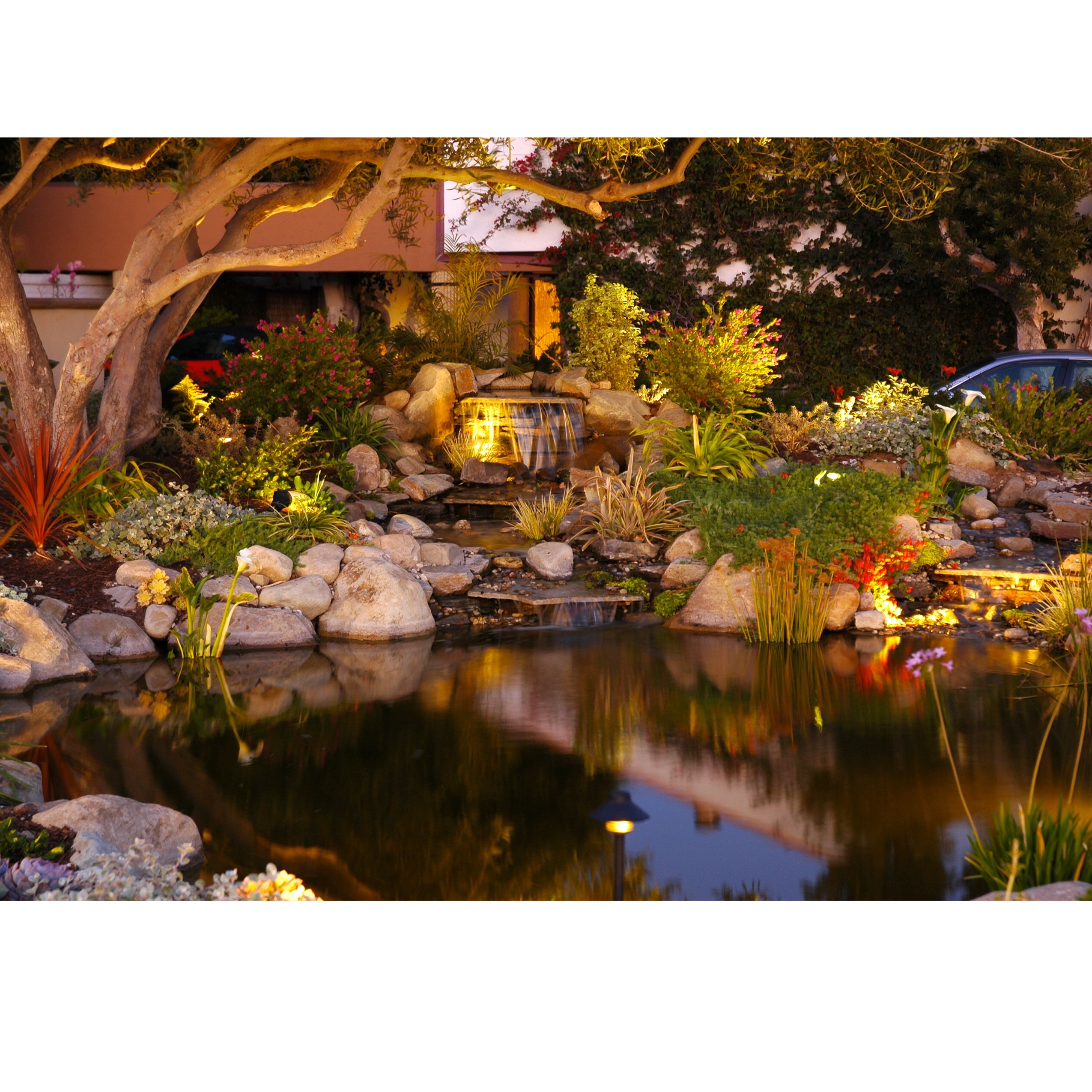
Many Pasadena properties, particularly in the older historic neighborhoods, were built when mature tree planting was part of the original landscape plan — decades before anyone thought about where a future water feature might go.
That changes how a project gets designed. Root protection zones around mature or protected trees limit where excavation can happen. Original clay or cast-iron irrigation and drainage lines, common in homes from Pasadena's early-to-mid-20th-century building boom, often need to be located and accounted for before ground is broken. And the grading on older hillside-adjacent lots near the Arroyo doesn't always match what a modern site plan assumes.
None of this rules out a project — it just means the design has to start with what's already there.
Most suited to established, tree-canopied properties:
Koi Ponds & Ecosystem Ponds — designed around existing root zones and mature planting rather than requiring their removal. Well suited to larger, established gardens with the space to work around protected trees.
Pondless Waterfalls — often the better fit on smaller historic-district lots or where root protection zones limit the excavation footprint available for a full pond.
Learn More About Pondless Waterfalls →
Landscaping — planting and hardscape design that respects tree protection requirements and integrates with an established, character-driven garden.
Learn More About Landscaping →
Also available throughout Pasadena:
Each designed the same way, around the specific site rather than a standard layout.


.avif)